As a UBC Master of Journalism student focusing on low-carb journalism, I am excited to share insights from a course at the UBC School of Population and Public Health on Science and Risk Communications. One of the most compelling topics in the course for me was creating narratives that communicate research findings engagingly. Serendipitously, as part of a Journalism Practices and Standards course, I interviewed two experts from UBC Okanagan’s Exercise, Metabolism and Inflammation Lab (EMIL): Barbara Oliveira, who studies low-carb diets in type 2 diabetes remission, and Jonathan Little, who focuses on metabolism and exercise science. Together, they led the Remission Possible social media program on type 2 diabetes remission.
From these interviews, it was clear that although their research focuses differ (diet vs. exercise) and communication priorities vary (accuracy vs. audience reach), both agree storytelling is key when communicating with type 2 diabetes patients, their main audience.

The storytelling assets were much more effective in reaching people and prompting them to take action compared to still-frame images.
Barbara Oliveira, Ph.D., R.D.
Three Ways to Turn Research Findings into a Compelling Story
Based on these expert insights and the Science and Risk Communications course learnings, here are three practical ways to transform dry data into engaging stories:
1. Introduce Characters
Barbara Oliveira calls characters “people with lived experiences”. These might be patients, doctors or researchers. Relatable characters connect readers emotionally, increasing engagement. The Remission Possible program prominently features patient stories, such as Elisabeth’s story, showing real journeys with diet or exercise to manage diabetes.

Telling the stories of individuals who have achieved type 2 diabetes remission really makes the connection. Their personal journeys are all different, but one clear message emerges: remission is a journey, not a destination. It’s their story—ongoing, with no fixed endpoint—and this is what shines through in every shared experience.
Jonathan Little, Ph.D.
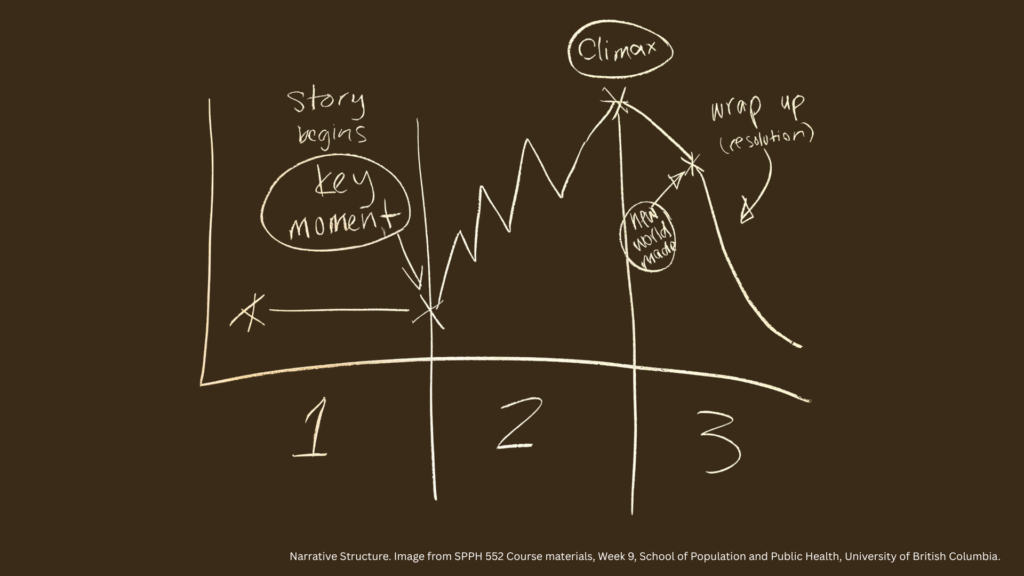
2. Build a Story Arc with Tension and Resolution
A good story follows a clear structure: a protagonist faces a challenge creating tension, followed by a climax and resolution. Elisabeth’s journey is a strong example again:
- Introduction/Protagonist: Elisabeth, diagnosed with type 2 diabetes in April 2024, feels exhausted, ill, fearing cancer, and finds exercise impossible.
- Inciting Incident: She adopts a whole-food, minimally processed, low-sugar diet and achieves remission, motivating further health improvements.
- Rising Action/Challenges: Elisabeth begins exercising thrice weekly, focusing on resistance training and cardio, facing the slow progress of body transformation.
- Climax: Elisabeth’s metabolic health improves and blood sugar stabilizes despite minimal weight scale changes.
- Resolution/New Normal: Elisabeth embraces sustainable lifestyle changes involving nutrition, exercise, and accountability with a gym buddy, leading her to celebrate one year in remission, inspiring others and showing the profound impact of change.
This narrative helps audiences understand research by bringing it “to life” rather than as abstract facts.
3. Invoke Emotion, Especially Fear and Hope
Emotion is a powerful connector in health communication. Fear of death, an almost universal concern, grabs attention when introduced early. Sounds morbid, I know, but we are trying to help people at the end of the day! Ending with actionable hope—showing ways to reduce risk or improve health—provides relief and encourages positive action. Elisabeth’s story exemplifies this: she expresses fear “When I was diagnosed in April 2024, I felt so exhausted and ill that I feared I had cancer. Exercise was unthinkable.” This opening hooks a reader by tapping into fear of serious illness. Her story ends on a hopeful note “Once I brought my blood sugar down and achieved remission, I felt so much better — I wanted to move!” inspiring engagement and motivation.

Once I brought my blood sugar down and achieved remission, I felt so much better—I wanted to move!
Elisabeth, Remission Possible program participant
Why Storytelling Matters in Science Communication
Narrative persuasion strengthens audience connection, reduces resistance, and makes abstract ideas concrete and believable. This kind of “transportation” into stories greatly enhances the effectiveness of health and science communication, especially for broad audiences. Importantly, while crafting stories based on research findings, one must never lose sight of accuracy. From my expert interviews, based on the science communication journey for he Remission Possible program, Dr. Little emphasized the challenge of simplifying complex metabolic science without compromising rigour, while Dr. Oliveira focused on combating dietary misinformation by simplifying and reframing scientific content into culturally sensitive, brief posts featuring “characters” or “people with lived experiences.” Their complementary approaches highlight the necessity of combining rigorous scientific messaging with empathetic, interactive storytelling to build trust and engagement—a balance that every science communicator should aim to maintain.
From Insights to Actions
Communicating complex science accessibly while meaningfully engaging the audience is vital for health journalists, especially on serious issues like type 2 diabetes. Insights from Oliveira, Little, and Elisabeth’s real-life journey show that storytelling—not just facts—is the way to accomplish that. Relatable characters, clear tension and resolution, and invoking emotions like fear and hope move communication beyond data to inspire change. Drs. Little and Oliveira’s patient’s, Elisabeth’s, story is a perfect example that moves readers from diagnosis fear to hopeful, sustainable lifestyle action, showing relief is not only possible but life-changing.
Actionable Takeaways for Science Communicators
- Humanize research by introducing characters with lived experience to foster empathy.
- Craft a clear story arc with protagonist, challenge, climax, and resolution to maintain engagement and show real impact.
- Use emotion strategically: open with relatable fears to hook attention, end with hopeful actions to motivate change.
- Balance accuracy with accessibility to maintain scientific rigour while being understandable to non-specialists.
- Use real stories like Elisabeth’s to illustrate complex science, blending research and human experience.
Applying these storytelling techniques, practicing science communicators and those in training can make research findings even more impactful.


Comments are closed